Posts

Showing posts with the label scribal arts

Parchment Part 2

Image
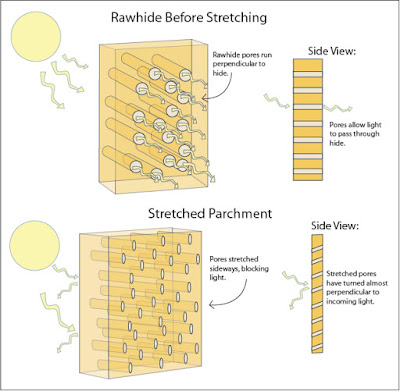
Parchment: an Overview of the Material  Definition Parchment is the cleaned, stretched skin of an animal, untanned, that is used as a writing medium. In medieval Europe it was the most common carrier for calligraphy or illuminations, whether bound into a book or left as a loose sheet or wrapped around a wooden dowel as a scroll. Skin sources Not all hides serve equally for making parchment. Pig skin, for example, has large, coarse pores, and the hair follicles go all the way through the hide. A parchment made from pig skin would have tiny holes everywhere, and a rough texture that would quickly dull the scribe's quill. Pig skin is also extremely thick/heavy, which would make very stiff, bulky parchment; it would not do well for making thin, flexible sheets for bookbinding. Horse, and other thick-skinned animals, would likewise make very stiff and coarse parchment (unless the parchmenter was able to split the hide into two sheets, but this is a relatively advanced skill and adds...
Parchment Part 1

Image
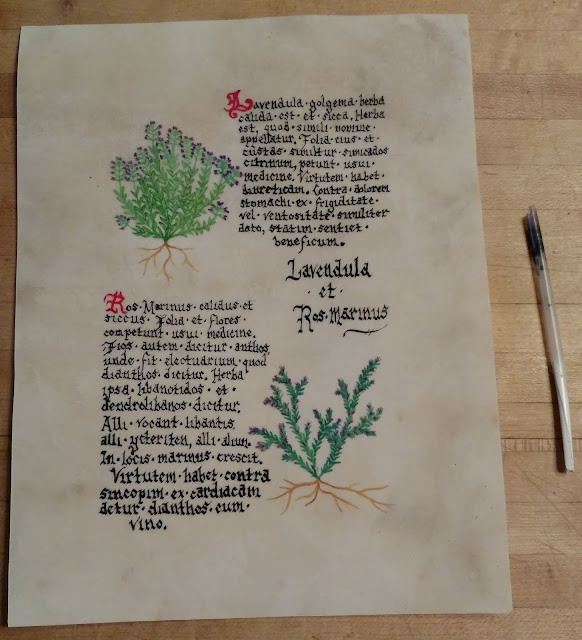
Parchment: Medieval Availability & Use Deerskin parchment, with a duck feather quill pen. In the medieval period, scribes across Europe relied upon animal skin for their painting/writing/book-making medium. Paper existed (such as papyrus, in northern Africa, hemp and mulberry paper in Asia) but in the colder, wetter climate of northern Europe, animal skin was comparatively abundant, affordable, more durable and easier to make. Skins were a constant natural byproduct of butchering livestock for meat. Flat, stretched rawhide, called parchment or vellum (depending on thinness & quality), could be written upon with char pencil, chalk, ink or paint; it could be dyed special colors and cut into useful shapes (rectangles, hearts, etc), and it would last for centuries, so long as it was kept dry. It was also far more reusable than papyrus. Cow, goat, sheep and deer skin could all be made into parchment without too much labor investment, and the skin from the young animals (cal...

Micro-Charring (Charcoal 4)

Micro-Charring for Pigment, Tinder or Medicine To read about what charcoal is, see The History of Charcoal . To read about the mound method of producing charcoal, see Charcoal Clamps , and to read about the underground method, see Pit Kilns . To read about preserving wood, see Charring Fence Posts . Apart from its use as a fuel for smelting, smithing and domestic heating, charcoal has a long history of use as pigment, tinder and medicine. Pigment Charcoal is a black substance that does not decay; it is completely light-fast (will not fade when exposed to sunlight) and chemically stable (it will not oxidize or change color over time). This makes it very useful in artwork and for writing. The oldest use of charcoal outside of a hearth was as pigment for drawing and painting on cave walls, more than 30,000 years ago. Sketching with charcoal sticks remained popular throughout human history and continues today. Painting with finely ground charcoal developed into a specialized ar...