Posts

Showing posts with the label charring

Charring Posts (Charcoal 5)
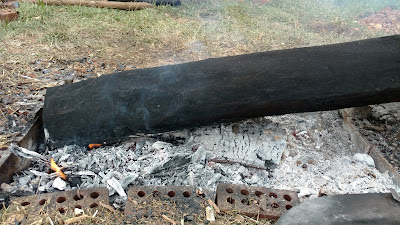
Image
Charring Wood as a Preservative Treatment To read about what charcoal is, see  The History of Charcoal . To read about the mound method of producing charcoal, see  Charcoal Clamps , and to read about the underground method, see  Pit Kilns . To read about other uses for charcoal, see Micro-Charring .  Char chemically changes wood, making it more resistant to rot, insects and fire damage, and can be done easily at home without specialized equipment. Background In temperate regions, wood posts are likely to rot, particularly at the line where they protrude from the ground. The denser the wood, the slower the rot (which is why locust wood makes good fence posts), and certain species of tree can contain chemicals that fight mold and insect damage, but here in the mid-Atlantic region of the US, these are not enough. Even cedar posts rarely last longer than 20 years without treatment. Locust posts frequently survive 10 years, and other hardwood species last...
Micro-Charring (Charcoal 4)

Micro-Charring for Pigment, Tinder or Medicine To read about what charcoal is, see The History of Charcoal . To read about the mound method of producing charcoal, see Charcoal Clamps , and to read about the underground method, see Pit Kilns . To read about preserving wood, see Charring Fence Posts . Apart from its use as a fuel for smelting, smithing and domestic heating, charcoal has a long history of use as pigment, tinder and medicine. Pigment Charcoal is a black substance that does not decay; it is completely light-fast (will not fade when exposed to sunlight) and chemically stable (it will not oxidize or change color over time). This makes it very useful in artwork and for writing. The oldest use of charcoal outside of a hearth was as pigment for drawing and painting on cave walls, more than 30,000 years ago. Sketching with charcoal sticks remained popular throughout human history and continues today. Painting with finely ground charcoal developed into a specialized ar...

Charcoal Pits (Charcoal 3)

Image
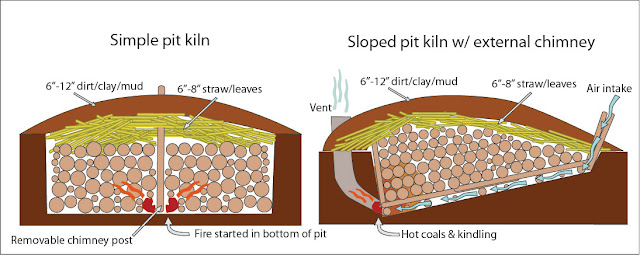
Charcoal Pits To read about what charcoal is, see The History of Charcoal . To read about the mound method of producing charcoal, see CharcoalClamps . To read about the crucible method of producing charcoal, see Micro-Charring .  To read about wood preservation, see Charring Fence Posts . Creating charcoal begins with preparing a burn site. With the mound method, this means scraping clean a level, above-ground surface, cleared to prevent the spread of fire. This can include building earthwork sides or half-walls to reduce the labor of enclosing the burn pile. However, a safer and more certain method is to dig a trench or pit hearth, and to conduct the charcoal burn below grade. Burning within a sheltering bank of earth provides two major benefits, compared with open mounds: 1) It reduces the dirt-shoveling labor involved in repeated burns, so long as the same site is used each time. Rather than having to cover an entire mound with dirt every time a charcoal mound is fired...

Charcoal Clamps (Charcoal 2)

Image
Charcoal Clamps: The Mound Method To read about what charcoal is, see The History of Charcoal . Site prep Charcoal production begins with preparing a burn site. This may be a trench or a pit, but it can also be a cleared above-ground surface at a safe distance from flammable materials. The charcoal burner had to scrape the flat site of all vegetable matter, including surface roots, which could spread the fire from the burn. Later techniques for this included using draft animals and a scraper blade to drag the area clean; in the Appalachian Mountains, colliers chose saddles between ridges and clear-cut, pulled out stumps, then scraped with a road blade to create the round, flat, clear spaces for their charcoal burns (and many of these clearings, with fire-road access, still serve as convenient camping spots today). Details on their method can be found in the Foxfire series, Vol. 5. For the mound method, it was imperative that the burn site be stable and completely level. If the...

The History of Charcoal (Charcoal 1)

Image
What is charcoal? Charcoal is a natural wood derivative left behind after wildfires, structure fires or campfires. Humans learned early on to create charcoal deliberately as a superior fuel source that was concentrated, light, and clean to transport, and that made hotter, smokeless fires. To create charcoal, dry wood has to be slowly carbonized to remove any moisture and many impurities. Hardwood converts more efficiently into charcoal than softwood (the denser, the better) and it must be seasoned (air-dried) for 6+ months in most climates before the charcoal burn, or else the moisture present in the wood will cause wasteful fuel loss during the burn. Ideally, oak wood that was cut in freezing weather (when the sap is underground) and dried until summer would make the best charcoal—although, other dense woods such as holly and birch were also used extensively in Europe, and any organic matter can be converted to charcoal under the right conditions. Making the dry wood into charc...